
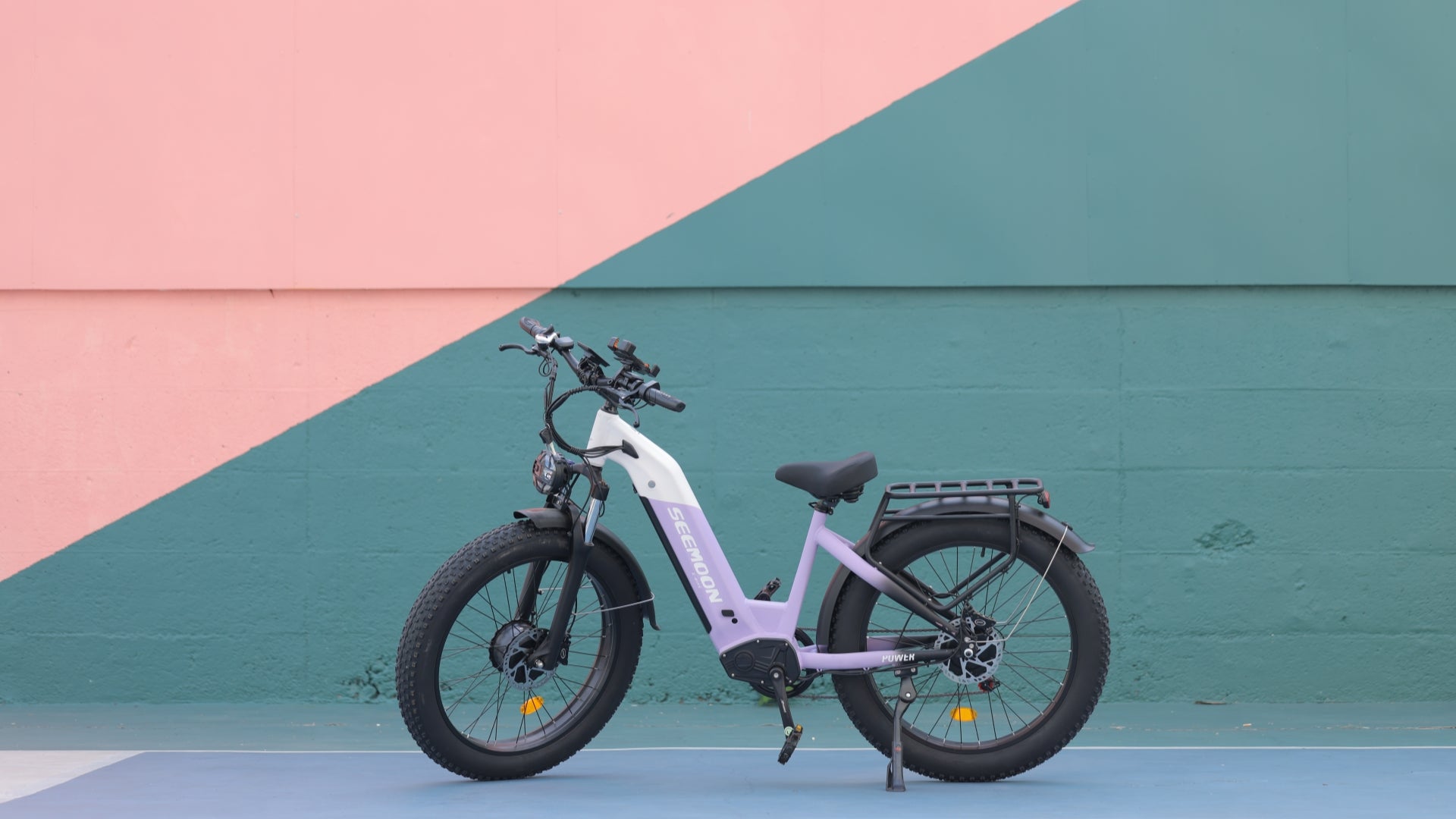
The electric bike boom is here. From the bustling streets of New York City to the scenic trails of Colorado, e-bikes have transformed how Americans commute and explore. But as the popularity of e-bikes has surged, so has the confusion surrounding the laws that govern them.
You might be asking: Do I need a license? Can I ride this on the sidewalk? Is my e-bike actually legal in my state?
These aren't just technical questions; they are the difference between a carefree ride and a hefty fine—or worse, having your bike impounded. The regulatory landscape in the United States is a patchwork of federal standards and state-specific traffic laws that can change when you cross a county line.
This comprehensive guide serves as your roadmap. Grounded in the latest federal standards from the Consumer Product Safety Commission (CPSC) and the widely adopted Three-Class System promoted by industry leaders like PeopleForBikes, we will demystify the regulations to keep you safe, compliant, and street-legal in 2026.
US Key Takeaways
-
The Three-Class System: Most states categorize e-bikes into Class 1 (Pedal-assist, 20mph), Class 2 (Throttle, 20mph), and Class 3 (Speed Pedelec, 28mph).
-
Federal vs. State: The Feds regulate the manufacturing (safety standards); your State regulates the riding (access, age, helmets).
-
The Sticker Rule: A permanently affixed label showing the class, wattage, and top speed is legally required on your bike frame.
-
No License Needed (Mostly): If your bike adheres to the 3-class definitions, you generally do not need a driver’s license, insurance, or registration.
-
Stay Away from "Out-of-Class" EVs: Unlocking your bike to exceed 28mph usually reclassifies it as an unregistered motor vehicle, which is illegal on public roads.
The Hierarchy of Law: Federal vs. State
To understand e-bike laws, you first need to understand who is in charge. There is a distinct separation of powers between who builds the bike and who rides it.
1. Federal Level: Manufacturing & Definition
At the top level, the Federal Consumer Product Safety Act (Public Law 107-319 / HR 720) defines what a "low-speed electric bicycle" is. This law, enacted way back in 2002, separates e-bikes from motorcycles and mopeds.
According to federal law, an e-bike is a consumer product (not a motor vehicle) if it meets these three criteria:
-
It has two or three wheels.
-
It has fully operable pedals.
-
It has an electric motor of less than 750 watts (1 horsepower).
-
It has a maximum speed of 20 mph on a paved level surface while powered solely by the motor.
Why this matters: If you buy a bike with a 1500W motor or no pedals, the CPSC does not consider it an electric bicycle. It is a motor vehicle, subject to DOT (Department of Transportation) regulations, meaning it likely needs turn signals, mirrors, a VIN, and a license plate.
2. State & Local Level: Access & Operation
While the Feds say the bike is safe to sell, your state and local government decide where you can ride it.
States manage "access." They decide if you can ride in the bike lane, if you need a helmet, and how old you must be. This is why a Class 2 e-bike might be allowed on a trail in Utah but restricted in parts of Michigan.
The 3-Class System: The National Standard
Since federal law was a bit vague on higher speeds, the bicycle industry developed the Three-Class System. As of 2026, over 40 states (including California, Texas, Florida, and New York) have adopted this system to clarify e-bike capabilities. Therefore, knowing which class your e-bike belongs to is the single most important factor in staying legal.
Class 1: Pedal-Assist Only
-
Definition: The motor provides assistance only when the rider is pedaling and ceases to provide assistance when the bicycle reaches 20 mph.
-
Mechanism: No throttle. You have to pedal to go.
-
Where to Ride: Class 1 bikes have the most freedom. They are typically treated exactly like traditional bicycles. You can ride them on bike paths, protected bike lanes, and often on multi-use paths in parks.
-
Ideal For: Commuters who want exercise and trail riders.
Class 2: Throttle-Assisted
-
Definition: The motor can be used exclusively to propel the bicycle (via a throttle) without pedaling. The assistance cuts off at 20 mph.
-
Mechanism: Has a throttle (thumb or twist) and usually pedal-assist as well.
-
Where to Ride: In most states, Class 2 bikes share the same access rights as Class 1. However, some specific single-track mountain bike trails may prohibit Class 2 bikes because the throttle can theoretically cause more trail erosion. Always check signage at the trailhead.
-
Ideal For: Commuters who want to arrive without sweating, and riders with mobility issues.
Class 3: Speed Pedelec
-
Definition: The motor provides assistance only when the rider is pedaling, but the assistance continues up to 28 mph.
-
Mechanism: Pedal-assist only (in most definitions), though some states allow a throttle up to 20mph mixed with pedal assist up to 28mph.
-
Where to Ride: Because of the higher speeds, Class 3 bikes are often restricted to roadways and on-street bike lanes. They are frequently prohibited from shared multi-use paths (like rail trails) and sidewalks to ensure pedestrian safety.
-
Ideal For: Long-distance urban commuters who need to keep up with city traffic.

Age Restrictions & Helmet Laws
Unlike a standard bicycle where "anything goes," e-bikes have stricter rules regarding who can operate them, primarily due to the motorized component. This section mainly introduces the requirements for helmet use and rider age restrictions under the three-tier classification of electric bicycles in the United States.
Age Limits
-
Class 1 & 2: Many states have no age limit, or a minimum age of 14.
-
Class 3: Because these bikes reach 28 mph, almost all states that recognize the 3-Class system require riders to be at least 16 years old.
Helmet Requirements
-
General Rule: If you are under 18, you likely need a helmet regardless of the bike class.
-
Class 3 Rule: Many states (like California) legally require all riders, regardless of age, to wear a helmet when operating a Class 3 e-bike. Given the speeds involved, wearing a DOT or CPSC-certified helmet is non-negotiable for safety.
-

The "Gray Areas": Unlocking, Modifications, and Outliers
We often see forums filled with advice on how to "unlock" the speed limit of an e-bike or buy a "750W+" bike that actually peaks at 1500W. Here is the harsh reality of stepping outside the regulations.
The Myth of "Off-Road Use Only"
Many non-compliant bikes are sold with a disclaimer: "For Off-Road Use Only." Buyers often interpret this as "I can ride this anywhere except the highway."
The Legal Reality: "Off-Road" legally means private property. It does not mean the bike lane, the sidewalk, or the public park trail. If you modify your e-bike to exceed 28 mph or 750W (nominal), it is no longer an e-bike. It becomes an "Unregistered Motor Vehicle."
-
Insurance: If you crash, your homeowner's or renter's insurance will likely deny the claim because the vehicle was illegal.
-
Liability: You could be personally sued for damages.
-
Confiscation: In cities cracking down on illegal mopeds (like NYC and London), authorities have the right to impound non-compliant vehicles.
-

Where Can You Actually Ride?
Knowing your bike class is half the battle; Knowing whether the terrain supports cycling is the other half.
1. Bike Lanes (On-Street)
Verdict: YES for Class 1, 2, and 3. This is the natural habitat for electric bikes. You generally have all the rights of a car but should stick to the designated lane.
2. Sidewalks
Verdict: Generally NO. Laws vary by city (not just state), but riding an e-bike on the sidewalk is increasingly prohibited, especially for Class 3 bikes. It poses a danger to pedestrians. Even if legal, it is often unsafe due to cars pulling out of driveways.
3. Multi-Use Paths (Rail Trails / Greenways)
Verdict: Mixed.
-
Class 1: Usually allowed.
-
Class 2: Often allowed, but check for "No Motorized Vehicles" signs that might implicitly ban throttles.
-
Class 3: Frequently banned due to speed limits (paths often have a 15 mph speed limit).
4. National Parks & Federal Land (BLM)
Verdict: Proceed with Caution. This is a common trap. The Department of the Interior (DOI) generally classifies e-bikes as motorized vehicles. However, recent policy changes allow Park Superintendents to designate specific trails as e-bike friendly.
-
Rule of Thumb: Do not assume you can ride an e-bike on a "non-motorized" mountain bike trail in a National Park unless specifically marked as "E-Bike Allowed." Always check the park's specific website before you go.
Battery Safety: The New Standard (UL 2849)
In 2026, compliance will not only be about speed, but also about fire safety. Following high-profile battery fires in dense urban areas, jurisdictions like New York City passed Local Law 39, which bans the sale, lease, or rental of e-bikes that are not certified to UL 2849 standards.
What is UL 2849? It is a rigorous safety standard for the entire electrical system—battery, motor, and charger—ensuring they don't overheat or explode.
The Authority View: Even if your state doesn't mandate UL certification yet, buying a UL-certified e-bike is the strongest indicator of a high-quality, trustworthy product. It protects your home, your family, and ensures your bike is "future-proof" against upcoming safety legislations.
FAQ: Common E-Bike Legal Questions
Q: Do I need a driver’s license to ride an e-bike? A: In most states, no, as long as the bike is Class 1, 2, or 3. If it exceeds these limits (e.g., 40 mph), it is a moped or motorcycle, and you absolutely need a license.
Q: Can I carry a passenger on my e-bike? A: Only if the bike is designed for it (i.e., it has a dedicated passenger seat and footrests). "Doubling up" on a single-seat bike is unsafe and often illegal.
Q: Can I get a DUI on an e-bike? A: Yes. In almost every state, operating a vehicle (including bicycles and e-bikes) under the influence of alcohol or drugs is a crime. You can lose your driver’s license for a DUI on an e-bike.
Conclusion: Ride Smart, Ride Legal
Navigating US e-bike laws doesn't have to be a headache. By sticking to the established Three-Class System, ensuring your bike carries the proper Compliance Label, and respecting local trail rules, you can enjoy the freedom of electric riding without looking over your shoulder.
At Seemoon, we believe in transparency and safety. All our e-bikes are rigorously tested, UL-certified, and clearly labeled to meet US Federal and State regulations.
Ready to hit the road?
Explore our collection of fully street-legal [ Off-road Series electric bicycle] and performance [Hunting and Long-Range Series electric bicycle] to find your perfect match.
(Disclaimer: Laws are subject to change. This guide is for informational purposes and does not constitute legal advice. Always verify with your local DMV or city ordinances.)
Share:
Seemoonebike brand story